Japan by Sea
Busan · Nagasaki · Kagoshima · Shimizu
Be considerate, observe, adjust
You are not expected to perform every custom flawlessly. Keep your voice down, queue properly, do not block passages, watch what locals do and apologise quickly when you get something wrong.
The 12 rules worth remembering
Phrase pocket
01Everyday behaviourGreetings, volume, punctuality and Japan's indirect “no”
Greetings and bowing
A small nod or shallow bow is enough. Nobody expects a tourist to calculate the precise angle of diplomatic inclination. Handshakes sometimes happen, but hugging and cheek-kissing are not standard greetings. Public displays of affection are usually restrained.
You will hear irasshaimase when entering shops and restaurants. It means “welcome”; no reply is needed.
Volume
Keep conversations moderate, use headphones and do not conduct phone calls aboard public transport. On a Shinkansen, move to the area between carriages if a call is necessary.
Punctuality
Arrive before the stated time for trains, tours and restaurant reservations. Contact a restaurant if delayed; reservations may be released when you do not appear.
Politeness can be indirect
Hesitation, a strained smile, chotto… (“that is a little…”) or muzukashii desu (“that would be difficult”) often means no. Do not push for a blunter rejection.
02Trains, stations and streetsQueues, bags, eating, escalators, rubbish and smoking
Boarding
Stand on the marked queue lines, wait beside the doors and let everyone exit first. Once aboard, move away from the doorway. Give priority seats to elderly, pregnant and disabled passengers, and adults with small children.
Some rush-hour trains have clearly marked women-only carriages. Entering accidentally is not a catastrophe; move at the next opportunity.
Bags
On crowded trains, put backpacks on the luggage rack, hold them low in front or place them between your feet. Do not block walkways with suitcases. Luggage forwarding, called takkyūbin or takuhaibin, and station coin lockers can make travel much easier.
Eating and drinking
Eating is normal on long-distance trains with forward-facing seats and tray tables. It is generally avoided on commuter trains, subways and buses. Walking while eating is less common; food stalls may provide a nearby area where customers finish their food.
Escalators
Local habits vary, but current guidance increasingly asks passengers to stand still rather than walk. Follow signs and the immediate flow.
Rubbish and smoking
Public bins are limited, so carry a small bag for wrappers and tissues. Use correctly labelled openings for combustible waste, cans, bottles and PET plastic. Smoking while walking is restricted in many cities; use designated smoking areas.
03Shoes, slippers and floorsSpot the genkan, protect the tatami and escape the toilet slippers
Shoes come off in homes, many ryokan, some restaurants, temple buildings, fitting rooms and other traditional spaces.
Look for a lowered entrance area called a genkan, a raised wooden or tatami floor, shoes already lined up, a shoe rack or slippers. Remove shoes before stepping onto the raised surface and turn them toward the exit when practical.
- Do not wear ordinary slippers on tatami; use socks or bare feet.
- Traditional accommodation may provide dedicated toilet slippers. Remove them when leaving the toilet.
- Bring socks without holes. Japan can turn an innocent sock into a public-facing document.
04Restaurant etiquetteNo tipping, chopstick taboos, payment trays and izakaya charges
No tipping
Pay the stated amount in restaurants, bars, taxis and hotels. Leaving cash may prompt staff to return it. Private guides accustomed to international visitors are an occasional exception, but tipping is still not expected.
Paying and oshibori
Many restaurants expect you to take the bill to the front register. Place cash or card on the small tray when one is provided. Cards are common, but small restaurants and rural businesses may be cash-only.
An oshibori is a wet hand towel. Hands-only is the safest approach in formal places; fold it and return it afterward.
Chopstick rules
Avoid pointing, spearing food unnecessarily or waving chopsticks while speaking. Put shared food onto the other person's plate instead.
Noodles, sushi and shared dishes
Slurping ramen, soba and udon is acceptable but not required. Nigiri may be eaten with fingers or chopsticks; dip the fish side lightly into soy sauce. Use serving chopsticks for communal dishes and ask before taking the final piece.
Starting, finishing and izakaya charges
Itadakimasu is said before eating and gochisōsama deshita afterward. Neither is required, but the latter is warmly received when leaving a small restaurant. Do not over-order; takeaway leftovers may be refused for food-safety reasons.
At an izakaya, an otoshi is a small dish representing a per-person seating charge, not a free appetiser. Say kanpai before drinking with a group.
05What to eatBeyond sushi and ramen: everyday meals, summer food and retro coffee
Essential experiences
- Japanese breakfast: grilled fish, rice, miso soup, pickles and tamagoyaki.
- Neighbourhood izakaya: order several small plates such as yakitori, karaage, agedashi tofu, grilled fish, gyoza, vegetables and dashimaki tamago.
- Teishoku: a set meal with a main dish, rice, soup and sides.
- Ryokan kaiseki: a sequence of local, seasonal dishes connecting food, ceramics and presentation.
Dishes worth seeking out
August food
Look for cold soba, hiyashi chūka, sōmen, kakigōri shaved ice, unagi and festival food such as yakisoba, takoyaki, grilled corn and taiyaki.
Convenience stores, depachika and kissaten
Convenience stores are good for onigiri, sandwiches, salads, soba, bento, coffee, desserts and electrolyte drinks. Department-store basement food halls, called depachika, sell polished prepared food and regional specialities.
Try a traditional kissaten for carefully brewed coffee, toast, curry or naporitan, Japan's magnificently unauthentic ketchup-based spaghetti.
06Shrines and templesHow to enter, purify, pray and collect seals respectfully
A Shinto shrine normally has a torii gate. A Buddhist temple may feature a large gate, incense burners, statues or a pagoda.
At a shrine
- Bow lightly before passing through the torii.
- Walk slightly to one side rather than along the centre.
- At the purification basin, rinse left hand, then right. Pour water into your left hand to rinse your mouth; do not touch the ladle to your lips.
- Place a coin in the offering box.
- Usually bow twice, clap twice, pray silently, then bow once. Follow posted instructions because practices vary.
At a temple
Be quiet and do not clap. You may make an offering, bow and pray silently. Extinguish incense by waving your hand rather than blowing. Photography may be prohibited indoors.
Fortunes, charms and stamps
- Omikuji: paper fortunes; a bad one may be tied to the designated rack.
- Omamori: protective charms for health, travel, study and other purposes.
- Goshuin: calligraphic shrine or temple seals collected in a dedicated book. Treat them as religious records.
Do not photograph ceremonies unless clearly permitted.
07Onsen and public bathsWash first, keep towels out and check tattoo policies
- Remove all clothing in the changing room. Swimsuits are normally not allowed.
- Take only the small modesty towel into the bathing area.
- Sit at a washing station and wash and rinse thoroughly.
- Enter quietly. Keep towel, soap and hair out of the water.
- Do not swim, splash or speak loudly.
- Lightly dry yourself before returning to the changing room.
Baths are generally separated by sex. Look for 男 for men and 女 for women rather than trusting curtain colour alone. Avoid bathing when intoxicated, dehydrated, feverish or unwell.
Tattoos
Policies vary. Some facilities prohibit tattoos; others allow small tattoos covered with a patch. Sento public baths are often more accepting, but not universally. A privately rented kashikiri-buro avoids both tattoo restrictions and public nudity concerns.
08Ryokan etiquetteFixed meal times, tatami care, futons and the correct yukata overlap
- Arrive by the requested check-in time; dinner may be served at a fixed time.
- Remove shoes at the entrance and keep luggage wheels off tatami.
- Use provided slippers except on tatami.
- Staff may prepare your futon while you are at dinner.
- The supplied yukata can usually be worn around the ryokan, though hotel rules vary.
09Shopping and moneyCash, fixed prices and where tax-free shopping is actually available
Carry several thousand yen even if you mainly use cards. Small restaurants, rural buses, shrine stalls and older ticket machines may not accept foreign cards or phone wallets. Japan is generally fixed-price; do not bargain in normal shops.
Tax-free shopping is not available in every shop
Tax-free shopping is offered only by shops officially registered as tax-free retailers. The scheme is nationwide, so participating shops are common in Tokyo, Osaka, Kyoto, Hiroshima and other tourist centres, but coverage becomes patchier away from major shopping areas.
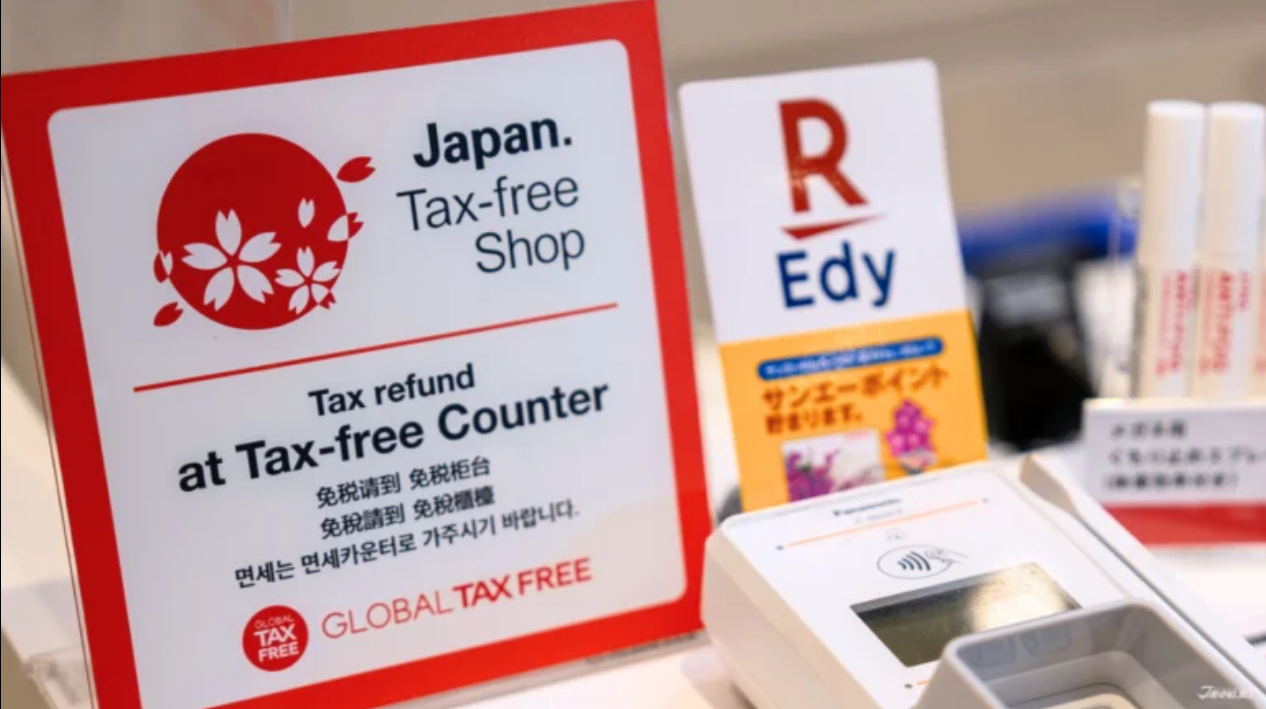
How to recognise and ask
The official red-and-white logo, “Tax Free” signs or the characters 免税.
Tax-free desu ka?
Is tax-free available?
At department stores, electronics retailers, fashion chains and drugstores in tourist areas, staff will usually know the process well. A department store may direct you to a dedicated tax-free counter elsewhere in the building. Some shopping centres operate a central counter that combines purchases from participating shops.
At a small independent shop, it may not be offered, only one staff member or counter may handle it, or communication may involve little more than pointing at the logo and presenting your passport. A normal unregistered shop cannot simply remove the tax because you are a tourist.
The rules during this August 2026 trip
Japan’s new airport-refund arrangement does not begin until 1 November 2026. During this trip, a participating shop will normally deduct the consumption tax when you buy.
- Spend at least ¥5,000 before tax in the same shop on the same day.
- Present your original passport, not a photograph or photocopy.
- Be in Japan under an eligible temporary visitor status.
- Take the goods out of Japan yourself.
- Keep tax-free consumables such as food, drink and cosmetics sealed until you leave Japan.
Passport, Visit Japan Web and cruise shore visits
Visit Japan Web can generate a tax-free shopping QR code, but only shops displaying the corresponding VJW acceptance mark can use it. Not every tax-free retailer supports the QR system, so carry the physical passport regardless.
Official guidance also recognises a cruise-ship tourist permit in relevant circumstances. Ask Celebrity what document you will receive for shore visits if the cruise line retains your passport.
The easiest routine
- Look for the logo before choosing tax-free as part of the purchase plan.
- At the cashier, say “Tax-free, please” before paying and show the required document.
- Keep sealed consumables unopened and retain the goods for export.
- Keep purchases reasonably accessible when departing. Customs can ask to see them; deal with customs before checking baggage when tax-free goods are packed inside it.
Official source · Japan Tourism Agency
10PhotographyAsk people, obey signs and do not turn neighbourhoods into sets
Ask before taking recognisable photos of individuals, especially on trains or inside cafés and shops. Respect no-photography signs and private-property boundaries. Do not block streets or doorways for a photograph.
With geisha or maiko in Kyoto, keep your distance and do not follow, touch or obstruct them. They may be travelling to work, not performing as street scenery.
11Nightlife and entertainment districtsThe non-negotiable rule: never follow a street tout
Choose somewhere researched independently or recommended by the hotel. Before entering a small bar, check for cover charges, minimum orders, the type of venue and clearly displayed prices.
A polite daijōbu desu while continuing to walk is enough. Do not debate or explain.
12August-specific realityHeat, Obon crowds and late-summer typhoon flexibility
- Start early and use museums, shops or a long lunch as an air-conditioned midday break.
- Carry water, sunscreen, a hat or parasol, and a small towel.
- Consider electrolyte drinks such as Pocari Sweat or Aquarius.
- Wear lightweight, breathable clothing. Shorts are generally fine; choose slightly more restrained clothing at formal religious sites.
Obon, usually around 13–16 August, is a major family and travel period. Transport and accommodation may be busy, and some family-run businesses close or shorten hours. It can also bring Bon dancing, lantern events and festivals.
Late August has greater typhoon risk. Keep flexibility around port calls and long journeys, and use official weather and transport information.
13Methylphenidate and ADHD medicationThe personal-use rules that matter for this family
- More than the table threshold requires a doctor certificate.
- For more than one month's supply, contact Japan's medicines authority at
yakkan@mhlw.go.jp. - Keep medication in labelled pharmacy packaging and carry a prescription or doctor letter as a practical precaution.
- Each person must carry their own medicine; do not combine family members' medication or entrust one person's controlled medicine to another.
Official source · Japan Narcotics Control Department
14Less obvious useful detailsPassports, toilets, taxis, service style and recovering from mistakes
Carry your passport
Foreign visitors are legally required to carry their passport and present it when asked by police. The original passport is also needed for tax-free shopping; a phone photograph is not equivalent.
Toilets
Modern toilets usually have familiar flush controls plus bidet functions. Red buttons and hanging emergency cords may summon staff rather than activate the next stage of the toilet's space programme.
Taxis
Rear taxi doors are often opened and closed automatically by the driver. Do not wrestle with them. Display the destination in Japanese or on a map, and do not tip.
Service and mistakes
Excellent Japanese service often means performing the established service very well, not redesigning it around every customer. Menu substitutions can be difficult. State genuine allergies clearly, but do not assume preferences can always be accommodated.
Do not panic after an innocent error. Observe, acknowledge and adjust. Resentment is more likely when visitors ignore signs, argue when corrected, photograph intrusively or treat residential areas as theme parks.
Official and practical sources
The guide is condensed from the supplied culture notes. Links require internet; the guide itself remains available offline.